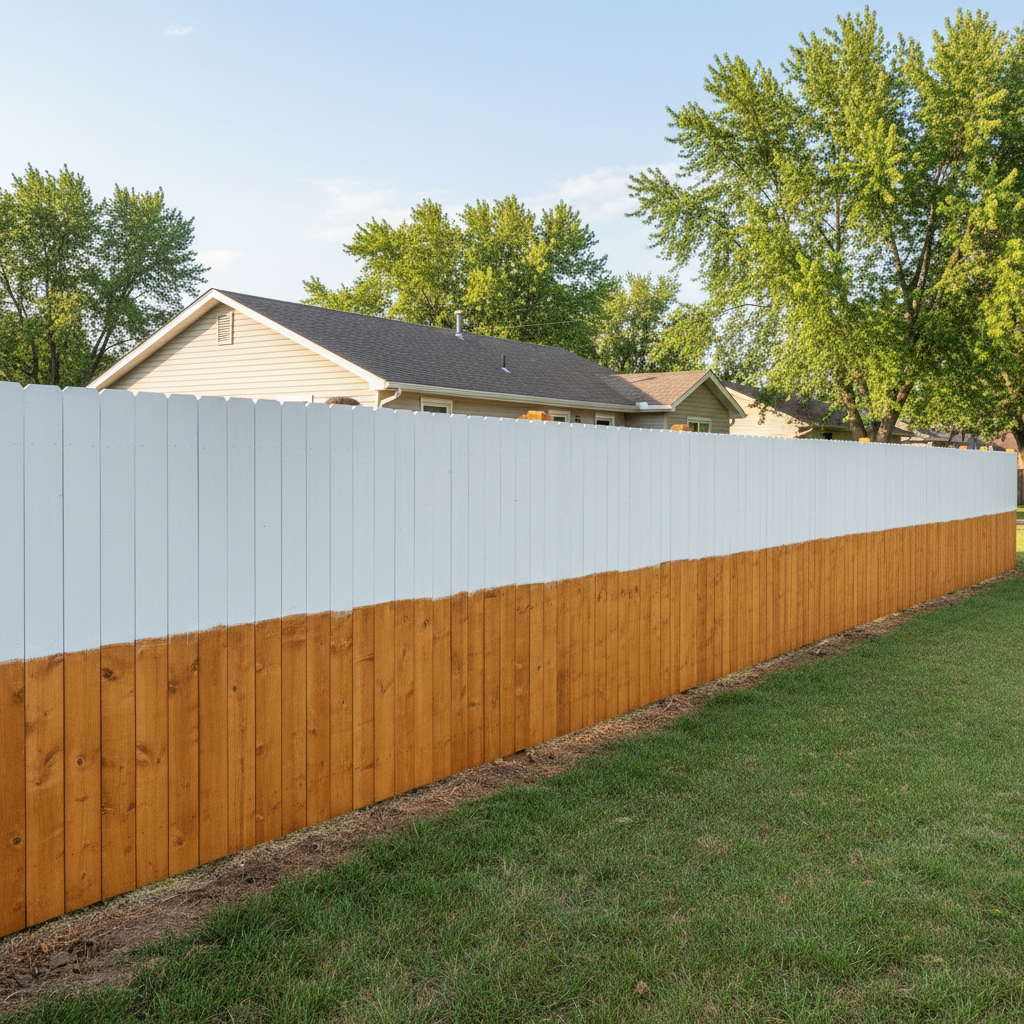
Your fence is a big part of your home's curb appeal and protection. But just like anything else outside, it takes a beating from our Nebraska weather – those hot, humid summers and brutal, icy winters. If your fence is looking faded, peeling, or just plain tired, you're probably wondering what it costs to get it stained or painted. Let's talk real numbers and what goes into that price tag.
What Affects the Price of Staining or Painting Your Fence?
There's no one-size-fits-all answer here, but a few key things really drive the cost up or down. You need to understand these before you even get a quote.
Fence Size and Type: This is the most obvious one. A small, 50-foot picket fence is going to cost a lot less than a 300-foot privacy fence. Wood type matters too; some woods absorb stain differently or require more prep.
Condition of the Existing Fence: Is your fence brand new and ready for its first coat? Or is it old, weathered, covered in mildew, and peeling paint? A fence that needs extensive cleaning, sanding, or scraping before any new product can go on will cost more in labor. Sometimes, if it's really bad, we might even need to replace a few pickets or sections, which adds to the bill.
Stain vs. Paint: Generally, staining is a bit quicker and often less expensive than painting. Paint requires more meticulous prep, often two coats, and can be harder to apply evenly. Stains soak into the wood, protecting it while letting the natural grain show through, while paint sits on top.
Product Quality: Just like with anything else, you get what you pay for. A cheap, big-box store stain might save you a few bucks upfront, but it won't last as long, meaning you'll be doing this again sooner. Professional-grade stains and paints offer better UV protection, mildew resistance, and durability. I always recommend investing in quality products; it saves you money in the long run.
Accessibility: If your fence is easy to get to, that's great. If it's got dense bushes, tricky corners, or is on a steep incline, it's going to take more time and effort, and that'll be reflected in the labor cost.
Typical Cost Ranges in Lincoln, NE
Alright, let's get down to some actual numbers. Keep in mind these are averages, and your specific project might fall outside these, but it gives you a good starting point.
Basic Staining (Good Condition Fence): For a fence in decent shape, needing just a good cleaning and one coat of quality semi-transparent or solid stain, you're usually looking at anywhere from $2.50 to $4.00 per linear foot. So, a 150-foot fence might run you $375 to $600.
Painting (Good Condition Fence): If you're going with paint, expect to pay a bit more due to the extra prep and coats. This could be in the range of $4.00 to $6.50 per linear foot. That same 150-foot fence could be $600 to $975.
Fences Needing Significant Prep: This is where the price jumps. If we have to power wash off years of grime, scrape peeling paint, or do minor repairs, add another $1.00 to $2.50 per linear foot on top of the staining or painting cost. So, a heavily weathered fence might be $5.00 to $9.00+ per linear foot total.
Remember, these are for standard 6-foot tall fences. Taller fences or more intricate designs will naturally cost more.
What Should a Quote Include?
When you get a quote from a reputable company like Valley Fencing Co., it should be clear and detailed. Don't settle for a handshake and a single number.
Linear Footage: The total length of the fence being worked on.
Preparation Details: What exactly will be done before application? Power washing, scraping, sanding, minor repairs?
Product Specification: The type, brand, and color of the stain or paint. How many coats will be applied?
Labor Costs: Clearly outlined.
Material Costs: For the stain/paint and any other supplies.
Cleanup: What you can expect once the job is done.
Warranty: Does the work come with any guarantee?
How to Avoid Overpaying for Fence Staining or Painting
Nobody wants to get ripped off. Here's how to make sure you're getting a fair deal:
Get Multiple Quotes: This is probably the most important tip. Don't just go with the first company you call. Get at least three detailed quotes from different local businesses. This helps you compare not just price, but also the scope of work and product quality.
Ask for References and See Past Work: A good contractor will be happy to show you examples of fences they've stained or painted. See if they have any in your neighborhood, like up in the Highlands or out by Wilderness Ridge. You can often tell a lot about their quality by looking at older jobs.
Understand the Products: Ask about the specific stain or paint they plan to use. Do a little research on it yourself. Is it known for durability? Is it appropriate for our climate?
Clarify Everything in Writing: Make sure all the details we just talked about are in the written quote or contract. This protects both you and the contractor.
Don't Always Go for the Lowest Bid: The cheapest option isn't always the best. Sometimes a slightly higher bid means they're using better materials, doing more thorough prep, or offering a better warranty. Value is about more than just the bottom line.
Taking care of your fence is an investment. By understanding these factors and doing your homework, you can ensure your Lincoln home's fence looks great and lasts for years to come without breaking the bank.