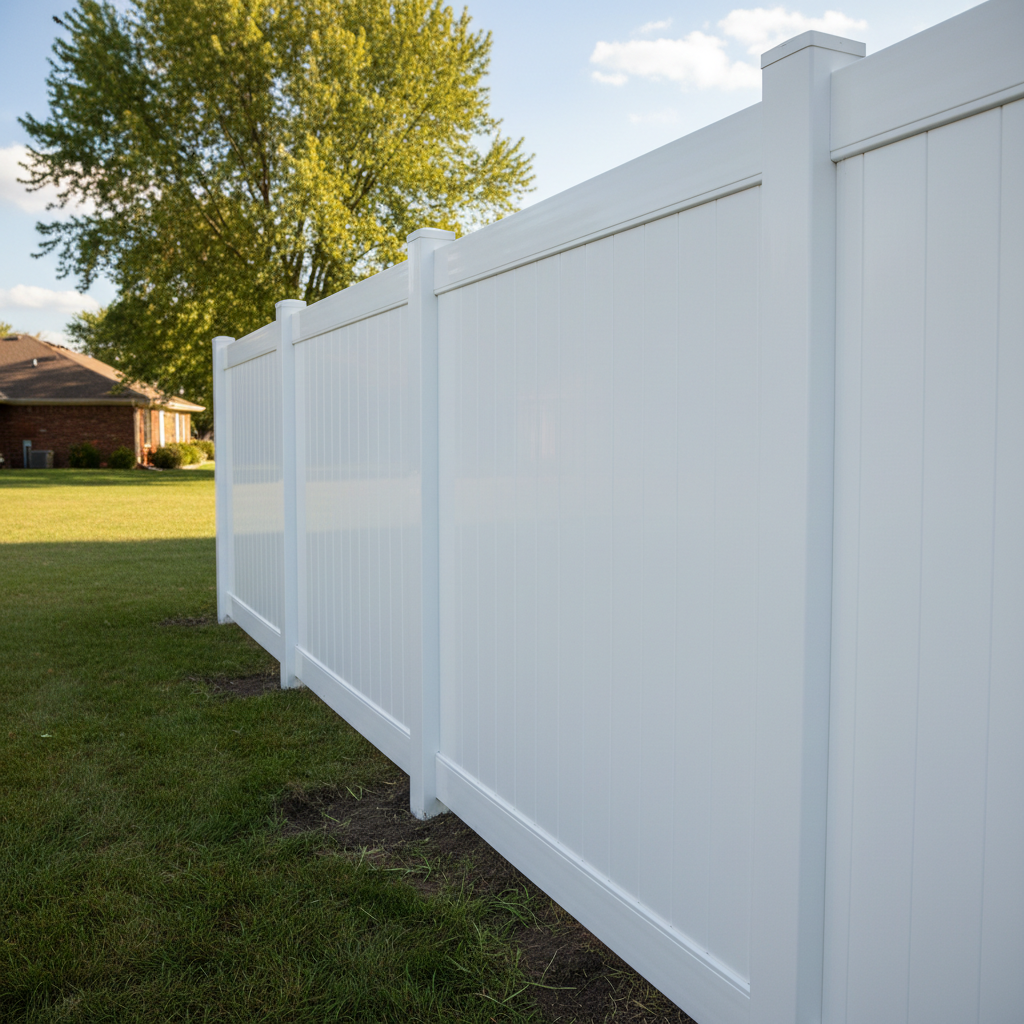
Is vinyl really as durable as they say, especially with our Lincoln weather?
This is probably the first thing folks ask me, and it's a good question, especially when you consider what our weather throws at us here in Lincoln. We get those scorching summers, icy winters, and sometimes hail that feels like golf balls. The short answer is yes, vinyl is incredibly durable. It's engineered to withstand a lot. Unlike wood, it won't rot, splinter, or get eaten by termites. It doesn't absorb moisture, so you don't have to worry about it warping or cracking from freeze-thaw cycles.
Now, 'durable' doesn't mean 'indestructible.' A direct hit from a car or a really severe storm with falling trees can damage any fence, vinyl included. But for everyday wear and tear, and standing up to our prairie winds and temperature swings, vinyl holds up exceptionally well. The key is quality. There's a big difference between cheap, thin vinyl and the heavier gauge, UV-stabilized stuff we use. That UV stabilization is crucial here; it prevents the fence from becoming brittle and yellowing over time in our intense summer sun.
What's the real cost difference between vinyl and wood?
Okay, let's talk brass tacks. Upfront, vinyl is almost always going to cost more per linear foot than a basic pressure-treated wood fence. There's no getting around that. The materials themselves are more expensive to manufacture, and the installation can sometimes be a bit more labor-intensive due to the precision required for panels and posts.
However, that's just the initial sticker price. When you look at the total cost of ownership over, say, 15 or 20 years, vinyl often comes out ahead. Think about it: a wood fence needs regular staining or painting every few years, plus repairs for rot or warping. That's money and time. With vinyl, once it's up, you're pretty much done. No painting, no staining, no sealing. A quick wash with a hose and maybe some mild soap is all it usually needs. So, while the initial investment is higher, the long-term savings on maintenance can make it a very smart financial choice for many homeowners.
How much maintenance does a vinyl fence actually need?
Compared to wood, vinyl is practically maintenance-free. I tell folks it's about as close as you can get without hiring someone to just stare at your fence all day. You won't be painting, staining, or sealing it. You won't be replacing rotten pickets or posts. What you *will* want to do is give it a good cleaning every now and then.
Our Lincoln soil can be pretty rich, and with rain, you might get some mud splash-up. Algae or mildew can sometimes grow in shaded, damp spots, especially on the north side of a fence. A simple garden hose with a spray nozzle is usually enough to knock off dirt and grime. For tougher spots, a bucket of warm water with a little dish soap and a soft brush will do the trick. You can even use a pressure washer on a low setting, but be careful not to get too close or use too high a pressure, as that can damage the surface. It's really just a matter of keeping it looking sharp, not preserving its structural integrity.
Can I really install a vinyl fence myself, or should I hire a pro?
Look, I'm a contractor, so you might expect me to say 'always hire a pro.' And for most people, that's what I recommend. Vinyl fence installation isn't rocket science, but it does require precision, the right tools, and a good understanding of property lines and local codes. Digging post holes in our sometimes rocky Lincoln ground can be a real pain, too. If your posts aren't perfectly plumb and spaced correctly, your panels won't fit right, and the whole thing will look crooked and unprofessional.
That said, if you're handy, have the time, the right tools (a post-hole digger, level, string line, concrete mixer, etc.), and you're meticulous, you *can* do it. But be honest with yourself. It's a big project. If you mess up, fixing it can be more expensive than just hiring Valley Fencing Co. to do it right the first time. Plus, we pull permits, mark utilities, and guarantee our work. For most folks, the peace of mind and professional finish are worth the investment.
Do vinyl fences come in different styles and colors?
Absolutely, they do. When vinyl first came out, it was pretty much just white picket fences, and that was it. Not anymore. Today, you've got a ton of options. White is still the most popular, and it looks great, especially against a green lawn. But you can also get tan, gray, and even some darker shades like black or dark brown. Just be aware that darker colors can absorb more heat and *might* show dirt a bit more.
As for styles, you've got your traditional picket, privacy (solid panels), semi-privacy (with small gaps), and even ranch rail styles. There are different post cap options too, from flat to pyramid to New England style. So, you can definitely find something that complements your home's architecture and your personal taste, whether you're in a classic older home in the Near South neighborhood or a newer build out by Wilderness Ridge.
What about fading or yellowing over time?
This used to be a bigger concern with early vinyl products, but technology has come a long way. Modern, high-quality vinyl fences are manufactured with UV inhibitors right in the material. These additives are designed to protect the fence from the sun's ultraviolet rays, which are what cause fading, chalking, and yellowing.
So, while no material is completely immune to the sun after decades of exposure, a good quality vinyl fence should retain its color and appearance for a very long time, often with a lifetime warranty against these issues. If you see a fence that's yellowed or become brittle, it's usually an older product or a lower-grade, cheaper vinyl that didn't have adequate UV protection. That's why I always stress using reputable brands and installers like Valley Fencing Co. who stand behind their materials.
Are there any downsides to vinyl fences I should know about?
I like to be upfront with people, so yes, there are a couple of things to consider. We already talked about the higher upfront cost compared to wood. That's probably the biggest one for most folks. Another thing is that if a section *does* get severely damaged – say, by a car or a really big tree limb – you might have to replace an entire panel or a larger section, which can be more involved than just swapping out a single wooden picket. It's not usually a small, localized repair.
Also, some people just prefer the natural look and feel of wood. Vinyl has a very consistent, uniform appearance, which is a huge plus for many, but others might find it less 'organic.' It really comes down to personal preference and what you value most in a fence. For low maintenance, durability, and a clean look, vinyl is tough to beat.